A line stop seal is selected for a specific service, pipe and head. Its diameter is important, but so are the process fluid, temperature and mechanical arrangement. Treating the sealing element as a generic spare can overlook the conditions that make it suitable for the job.
Describe the fluid accurately
“Gas”, “oil” and “water” are useful headings, but they are not complete fluid specifications. The selection discussion should identify the actual medium and relevant additives or contaminants. Cleaning or commissioning fluids may also need consideration if the seal will encounter them.
Elastomer compatibility depends on the compound and exposure conditions. A polymer family name is not a complete approval for every fluid or duty. Trelleborg’s chemical compatibility guide explains how the medium, pressure and temperature can affect elastomer properties and sealing performance. Generic compatibility charts are a screening aid, not a substitute for application review.
Use the relevant temperature and pressure conditions
Give the supplier the operating conditions and any project-defined extremes, rather than one convenient normal value. Explain whether exposure will be brief or prolonged. The temperature of the process and the conditions around the equipment should be identified separately where they differ.
For isolation, the differential pressure across the head is also relevant to the proposed arrangement. A maximum pressure displayed for a product family should not be transferred automatically to every sealing material, size or operating temperature.
Confirm the internal geometry
A seal works against the inside of the pipe. Nominal size and outside diameter alone do not establish the surface it will meet. The project information should address the internal diameter, wall thickness and relevant condition of the intended sealing location.
Ovality, deposits and local surface features may affect the assessment. Record what has been measured, what comes from the pipeline records and what remains to be confirmed. This allows the manufacturer and operator to decide whether the proposed head and seal configuration are appropriate.

Specify the head and seal together
The line stop head provides the mechanical arrangement in which the sealing element operates. Its configuration, attachment details and actuator interface are part of the selection. A replacement element should therefore be tied to an identified head and application, rather than ordered from dimensions alone.
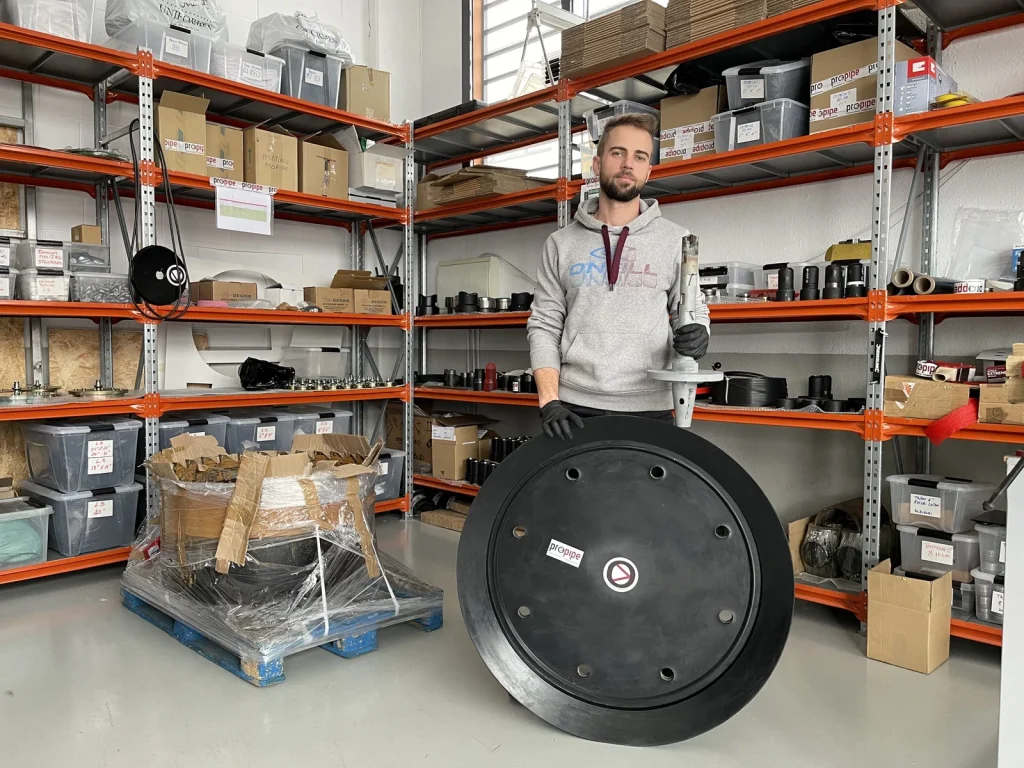
Propipe offers sealing elements in Buna-Nitrile, Viton and other polymers, with finishing options for the application. The choice of material and finished dimensions should be confirmed for the required duty.
Preserve the seal before it reaches the pipe
Storage and handling are part of the equipment lifecycle. Keep the element identified and protected from avoidable damage, and obtain the storage and inspection guidance for its compound. A seal that has been stored, transported or previously used still needs an appropriate condition review before being assigned to a project.
The resulting enquiry should bring together the fluid, pressure, temperature, pipe internal geometry, head reference and intended duration of use. Send those details to Propipe to discuss the selection and supporting documentation.
Technical background: Trelleborg Chemical Compatibility Guide, for general material-compatibility principles. It is not a rating or approval for a Propipe line stop assembly.
Continue reading: Seven engineering questions before a hot tap or line stop. Photographs: Propipe website archive.


